[President] Koji Fukuoka, Ph.D, Master Mariner.
Dr. Koji Fukuoka is the developer of RMQMP®, a framework developed for understanding nonlinear interactions and designing safety within complex socio-technical systems.
He is a scientist-practitioner engaged in both research and practical implementation in safety design, accident investigation and analysis, Safety Management Systems (SMS), and Business Continuity Management Systems (BCMS).
Dr. Fukuoka earned his PhD in Maritime Science and Technology from Kobe University in 2016. He previously served for 20 years in the Japan Coast Guard and later worked as an accident investigator at the Japan Transport Safety Board (JTSB), conducting accident investigations and analyses. During this period, he also studied accident investigation at Cranfield University (UK).
At the international level, he contributed to safety initiatives through the International Maritime Organization (IMO) as a Correspondence Group Analyst and served as an IMO consultant, providing training on marine casualty and incident investigation to government officials in the Philippines.
He subsequently led the development and implementation of SMS and established a university-wide risk management framework at the Okinawa Institute of Science and Technology Graduate University (OIST). He later served as a Professor at Kyushu University, where he led initiatives related to BCMS and conducted research and education in accident prevention and safety science.
These multidisciplinary experiences across field operations, accident investigation and analysis, international safety systems, organizational implementation, and higher education provided both the practical and theoretical foundation for the development of RMQMP.
Integrating these experiences, Dr. Fukuoka developed the model as a framework for understanding nonlinear interactions and designing safety within complex socio-technical systems.
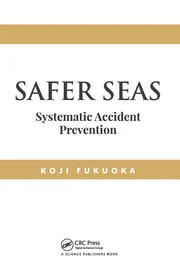
In 2025, he published Accident Prevention and Investigation: A Systematic Guide for Professionals, Educators, Researchers, and Students through Wiley, presenting a systematic approach to accident prevention, safety design, and operational diagnosis centered on the model, particularly within higher education and research environments.
Building upon this work, he subsequently expanded RMQMP into a broader safety design framework applicable to complex socio-technical systems and high-risk industries, including aviation, maritime transportation, nuclear power plants, chemical plants, AI-based autonomous systems, and organizational safety management.
On July 15, 2026, RMQMP Institute was founded to advance Safety Intelligence through research, education, and the development and implementation of accident prevention systems based on the RMQMP framework.